Have you ever needed to know something important and immediately reached for your phone?
I know I have!
Whether it’s figuring out how long food stays safe during a power outage, remembering a recipe, or looking up how to preserve something from the garden, we’ve gotten pretty comfortable having answers just a few taps away.
But what happens when the electricity goes out, the internet isn’t working, or your phone battery is dead?
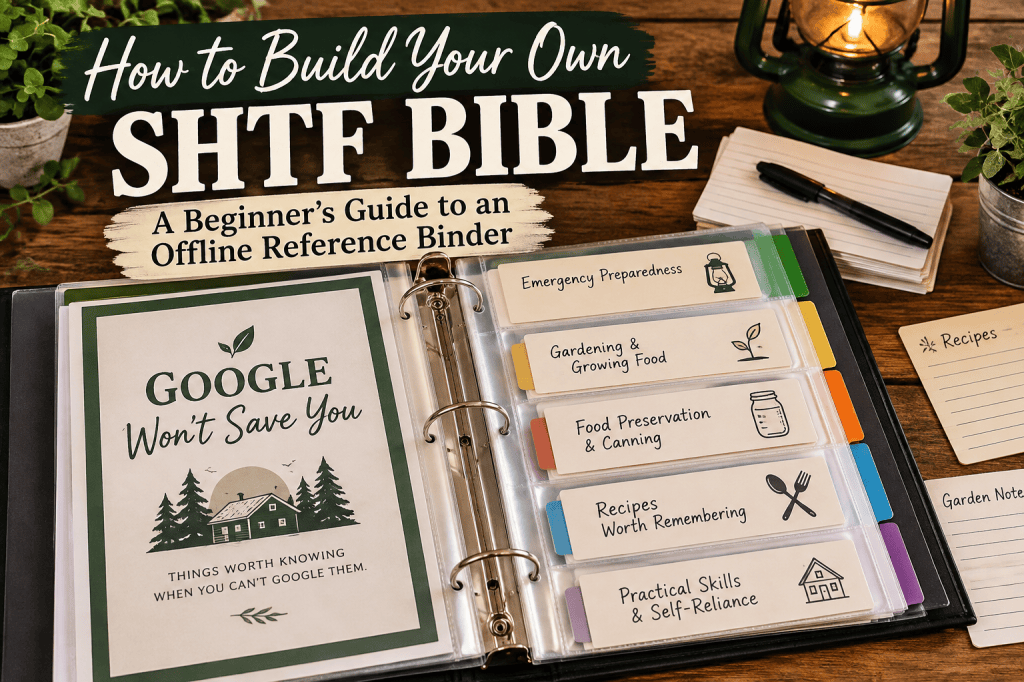
That’s what inspired me to start building something I call our SHTF Bible.
Don’t let the name scare you! It’s simply a binder filled with practical information worth keeping on paper.
I’m talking about useful things like food safety guidelines, emergency preparedness tips, gardening notes, food preservation instructions, and recipes you might want when Google isn’t an option.
I’m not building it because I expect the world to end tomorrow. I’m building it because I think there’s something comforting about knowing where to find important information without depending on a screen.
And the best part? You don’t have to be an expert to start one.
I’m learning as I go, and I’d love for you to build yours alongside me.
What You’ll Need to Start Your SHTF Bible
One of the things I love about this project is that you don’t need anything fancy to get started. A binder, some paper, and a little organization are enough.
But if you’re like me and enjoy having everything neatly arranged, color coded and spicy, there are a few supplies that can make building your SHTF Bible easier.
This section contains affiliate links. As an Amazon Associate I earn from qualifying purchases.
1. A sturdy three-ring binder
I recommend starting with a 2-inch or 3-inch D-ring binder. Choose one with a clear front cover so you can add your own SHTF Bible cover page.
2. Pocket tab dividers
These help organize your binder into sections such as gardening, food preservation, emergency preparedness, recipes, and practical skills. I especially like the idea of dividers with pockets for loose notes and reference cards.
3. 4 × 6 index cards
These are perfect for writing down recipes, quick instructions, important measurements, and information you want to remember.
4. Clear 4 × 6 binder sleeves
These are especially useful for protecting printed reference cards while keeping them easy to remove and replace.
5. A laminator (optional)
If you want your reference cards to last longer and stand up to frequent handling, a small laminator can be a helpful upgrade. But don’t feel like you need one to get started.
6. Laminating pouches
If you decide to laminate your cards, make sure you buy pouches that work with your laminator. For my 4 × 6 reference cards, I’d look at 5 × 7 pouches.
Remember, the goal isn’t to build the fanciest binder. It’s to create a practical reference book that works for you and your family.
How to Organize Your SHTF Bible
Now that we’ve gathered our supplies, it’s time for the fun part: deciding what goes inside!
I’m organizing my SHTF Bible into sections so I can find important information quickly without having to search through a pile of papers.
Here are the sections I’m starting with:
1. Emergency Preparedness
Power outages, emergency contacts, food and water safety, basic emergency checklists, and other information worth having when everyday conveniences aren’t available.
2. Gardening & Growing Food
Planting schedules, seed-starting instructions, growing tips, garden layouts, and notes about what works (and what doesn’t!) in my garden.
3. Food Preservation & Canning
Trusted canning instructions, safe food preservation methods, dehydrating tips, freezing guidelines, and helpful reference charts.
4. Recipes Worth Remembering
Simple recipes made with basic ingredients, including breads, pantry meals, and foods you can prepare without complicated equipment.
5. Practical Skills & Self-Reliance
Everyday skills, useful how-to instructions, household tips, and things I’d rather know before I actually need them.
You can organize your binder however you like. The goal is to make it useful for your household.
And don’t feel like you need to fill every section immediately. I’m building mine one reference card at a time, and you can too!
Start With Your First SHTF Bible Reference Card
You don’t need to fill an entire binder in one weekend. Start with one useful piece of information.
My first reference card is about something that can happen to anyone: a power outage.
After my daughter called about losing electricity at her college house, I started looking into how long food stays safe in the refrigerator and freezer.
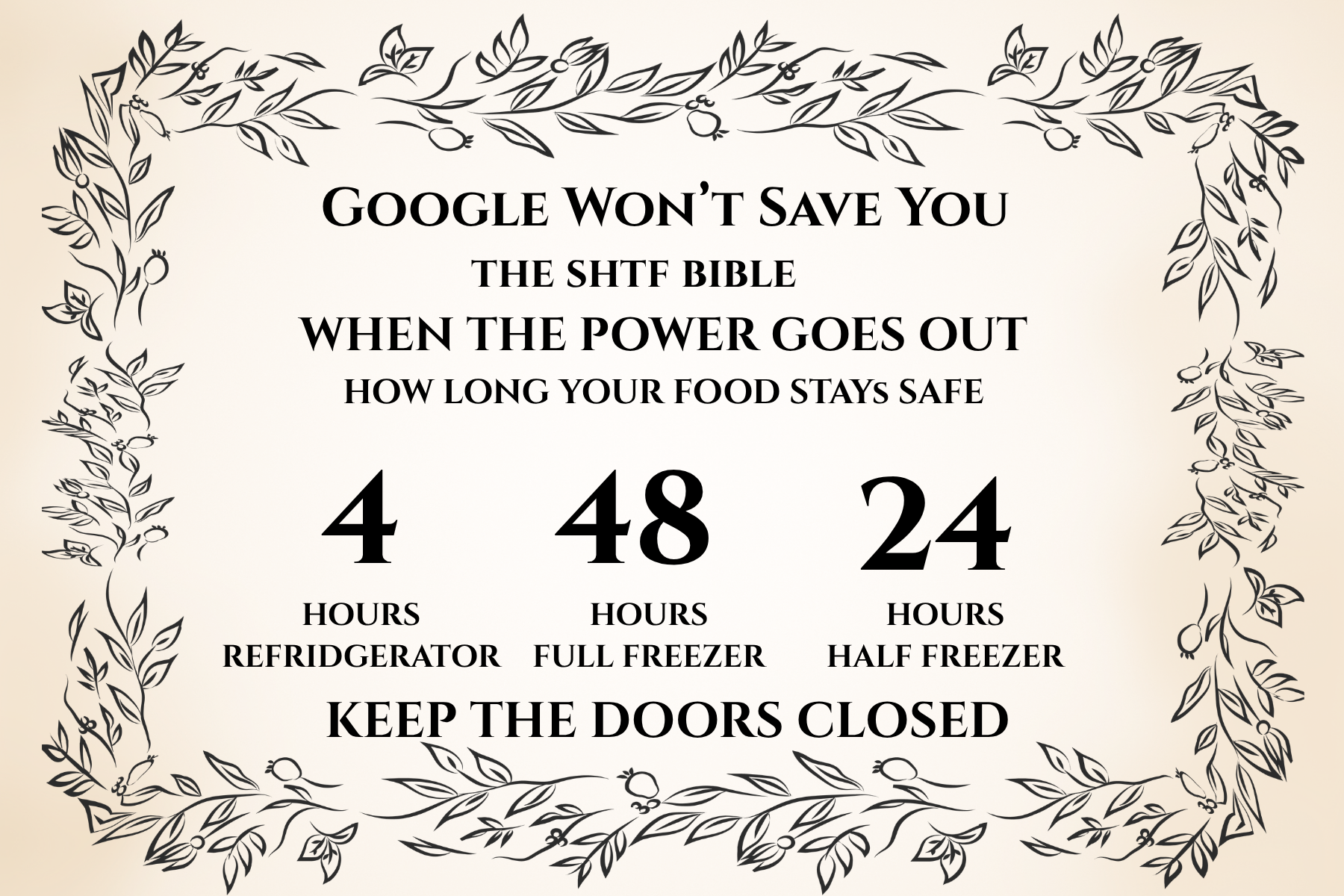
That’s how I learned the 4–48–24 rule:
- 4 hours: An unopened refrigerator keeps food cold for approximately four hours.
- 48 hours: A full freezer can maintain its temperature for approximately 48 hours.
- 24 hours: A half-full freezer can maintain its temperature for approximately 24 hours.
These times assume the doors stay closed. They’re guidelines, not guarantees, so actual food temperatures matter.
I turned that information into a 4 × 6 reference card for my SHTF Bible.
You can make your own cards using index cards, a computer, or a design program like Canva. Write down the most important information, include the source, and add the card to your binder.
Read My First SHTF Bible Lesson: What to Do When the Power Goes Out
The important thing isn’t making every card beautiful. It’s having useful, accurate information available when you need it.
Start Small. Keep Learning. Be Prepared.
Your SHTF Bible doesn’t have to be perfect, expensive, or completely filled out before it’s useful.
Start with a binder you already own, a few pieces of paper, and one topic you want to learn more about.
Maybe it’s how to keep food safe during a power outage. Maybe it’s a recipe your family loves, a gardening tip you don’t want to forget, or a checklist for an unexpected emergency.
Whatever you choose, write it down and keep it somewhere you can find it.
I’ll be sharing more SHTF Bible reference cards, practical skills, recipes, and lessons as I build my own collection.
Because some things are worth knowing when you can’t Google them.
What’s the first thing you’d put in your SHTF Bible?


Leave a Reply