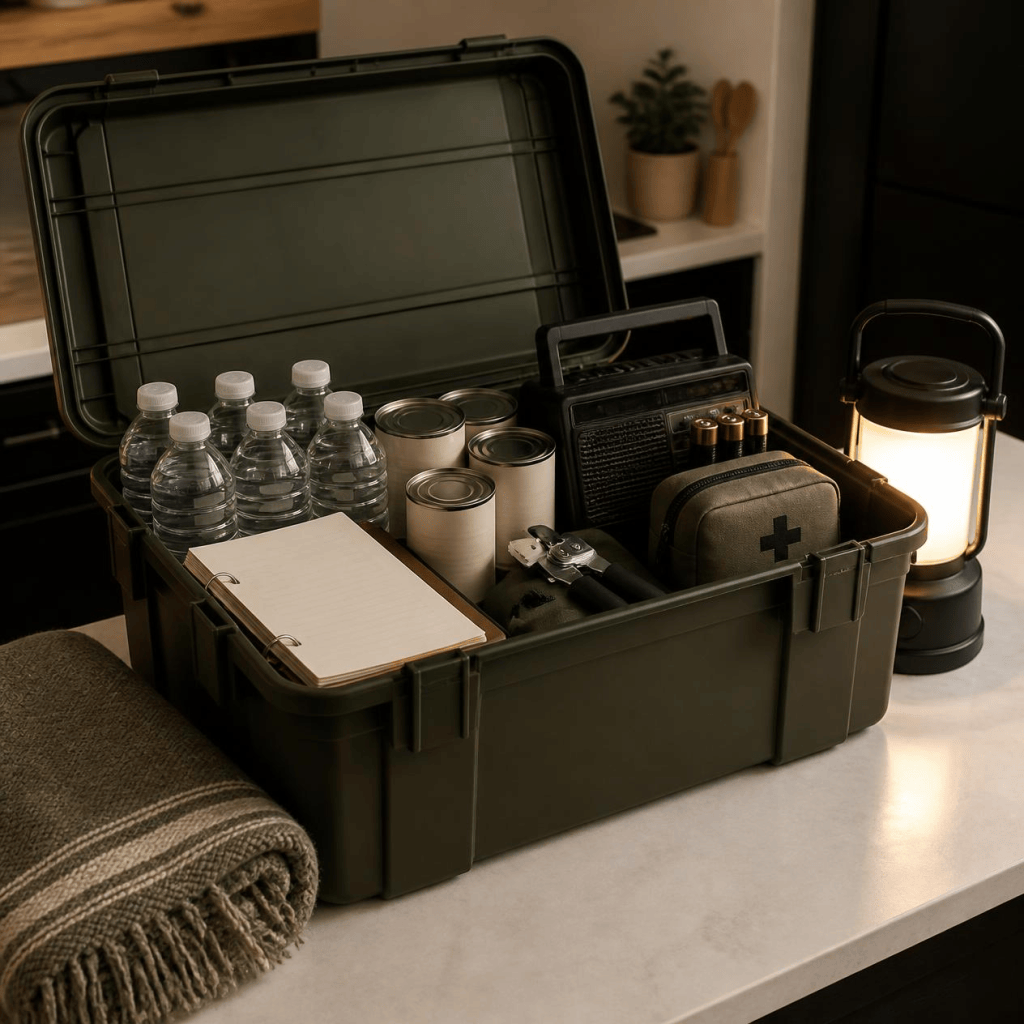
Be Ready Before the Lights Go Out
A power outage can happen without warning — a storm, a grid failure, a downed line. And the moment it does, you quickly discover how much of your home depends on electricity.
The lights, the refrigerator, the Wi-Fi, your phone charger — and sometimes the way you heat or cook your food.
When my daughter called from her college house after the electricity was shut off, her biggest worry was the food in the refrigerator. That moment stuck with me. What should we actually have ready before the power goes out?
I’m not talking about an expensive survival bunker or a garage full of gadgets you’ll never use.
I’m talking about a practical, affordable power outage kit — a small collection of supplies that can make an unexpected blackout significantly less stressful.
I’ve been building my own preparedness knowledge one step at a time, and below I’m sharing ten essentials I genuinely think are worth having in your home.
Some of these you may already own. Others are worth picking up gradually as your budget allows.
Because when the lights go out, the time to prepare has already passed.
10 Essentials for Your Power Outage Kit
You don’t need to buy everything at once. Start with what you have, note the gaps, and add items over time. Each one below earns its place.
Disclosure: This article contains affiliate links. As an Amazon Associate, I earn a small commission from qualifying purchases — at no extra cost to you. I only recommend products I’d genuinely consider for my own household.
1. A Battery-Powered Lantern
Best for: Lighting a room hands-free so the whole family can move around safely.
When the electricity goes out, you’ll feel just how dark a home really gets. A battery-powered LED lantern solves that immediately — it lights up a room, stays stable on a surface, and keeps your hands free for everything else.
What to look for: Multiple brightness settings, a wide stable base, and a common battery size that’s easy to restock. Consider keeping one in the kitchen or main living area and a second near the bedrooms.
→ See the lantern I use and recommend
2. A Reliable LED Flashlight
Best for: Moving through the house safely, checking the breaker box, or finding supplies in the dark.
A lantern lights a room — a flashlight goes where you go. The two work together. Keep one near your bed so you can orient yourself the moment the power cuts out, and another in your emergency kit.
What to look for: A bright, durable LED model with a runtime you can depend on. A headlamp is an excellent alternative if you need both hands free while working.
→ See the LED flashlight I recommend (solar option available)
3. A Portable Phone Power Bank
Best for: Anyone who relies on their phone to communicate, receive emergency alerts, or contact family during a crisis.
Your phone is your lifeline during a blackout — for emergency updates, family check-ins, and basic communication. But a dead battery makes it useless.
A portable power bank lets you recharge without a wall outlet. Look for one that’s compatible with your phone’s charging connector and has enough capacity to charge it at least once or twice.
Practical tip: Keep it plugged in and topped off in a consistent spot — you want it fully charged before an emergency, not the morning after.
→ See the power bank I recommend
You don’t need the most expensive version of any item on this list. A dependable product that fits your household and budget is what matters.
4. A Battery-Powered or Hand-Crank Emergency Radio
Best for: Households in areas prone to severe weather, or anyone who wants reliable information when the internet goes down.
When the power goes out, your Wi-Fi and internet router often go with it. If cell service becomes unreliable, an emergency radio may be the only way to stay informed about severe weather warnings, evacuation instructions, or restoration timelines.
What to look for: A model that receives NOAA Weather Radio and local AM/FM stations. I especially like having more than one power source — batteries plus a hand crank means you’re covered even if the batteries run low.
A radio won’t restore the power, but it can help you make smarter decisions during an extended outage.
→ See the emergency radio I recommend
5. A Refrigerator and Freezer Thermometer
Best for: Anyone who wants to make confident, safe decisions about food during and after an outage — without guessing.
This might be the most overlooked item on the list — and one of the most practical. When electricity goes out, the question you’ll face is: is the food still safe?
A refrigerator and freezer thermometer gives you an actual reading instead of a guess. That matters when you’re deciding what to keep and what to throw away.
According to food safety guidance, an unopened refrigerator generally keeps food cold for about four hours. A full freezer may hold temperature for up to 48 hours; a half-full freezer, about 24 hours — provided the doors stay closed.
Important safety note: These are general guidelines, not guarantees. Refrigerated perishables held above 40°F for more than two hours should be discarded. Frozen food may be safe to refreeze or cook if it still contains ice crystals or has stayed at 40°F or below. When in doubt, throw it out — and never taste food to determine whether it’s safe.
What to look for: A model that’s easy to read in low light and accurate across both fridge and freezer temperature ranges.
→ See the refrigerator/freezer thermometer I recommend
6. A Well-Insulated Cooler
A good cooler can be useful when a power outage lasts longer than expected.
If you have access to ice or frozen gel packs, an insulated cooler may help keep essential perishable foods cold temporarily.
But a cooler doesn’t automatically make food safe. Keep a thermometer inside and make sure perishable foods stay at 40°F or below.
I also like the idea of having a cooler ready for other situations, like road trips, camping, or transporting groceries.
→ See My Cooler Pick
The goal isn’t to own every emergency gadget available. It’s to have a few dependable supplies ready before you need them.
7. Reusable Ice Packs
When the power goes out, keeping food cold becomes a priority.
Reusable ice packs are useful to have frozen and ready before an emergency. They can help keep food cold in an insulated cooler, especially when combined with other frozen items.
I like that they’re reusable and can also come in handy for grocery trips, picnics, and camping.
Just remember: ice packs don’t guarantee food safety. Use a thermometer to make sure perishable foods stay at 40°F or below.
→ Shop My Reusable Ice Pack Pick
8. Emergency Water Storage Containers
We don’t always think about losing access to water during a power outage, but some homes rely on electric well pumps or other systems that need electricity.
That’s why keeping emergency drinking water on hand is a smart idea.
A good starting point is at least one gallon of water per person per day for three days, with additional water for pets, hot weather, or medical needs.
You can store commercially bottled water or use clean, food-grade containers designed for drinking water.
Choose containers that are easy to carry, seal securely, and fit your available storage space.
→ Shop My Water Storage Container Pick
9. Extra Batteries
A battery-powered lantern or flashlight isn’t much help if the batteries are dead!
Keep a supply of the correct battery sizes for your emergency equipment. Check whether your lantern, flashlight, and radio use AA, AAA, D-cell, or another battery type.
Store spare batteries somewhere dry and easy to find, and check expiration dates periodically.
It’s a small thing that can make a big difference during a blackout.
→ Shop My Battery Supply Pick
10. A Dedicated Emergency Supply Organizer
Having emergency supplies is one thing. Being able to find them in the dark is another!
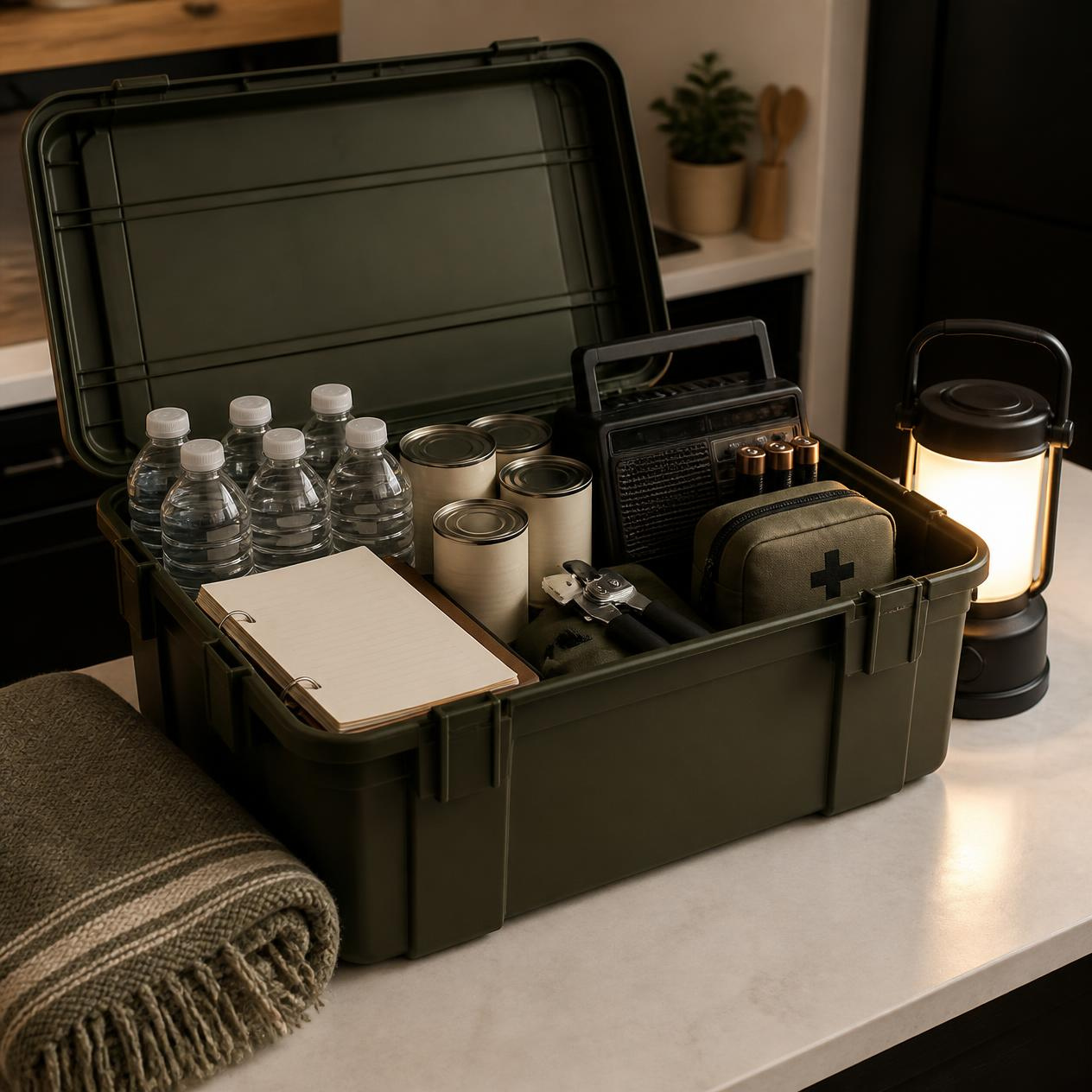
Consider keeping your blackout essentials together in a sturdy storage bin, tote, or emergency supply bag.
Label it clearly and store it somewhere everyone in your household can access.
You might also include a printed emergency contact list, basic first-aid supplies, and a copy of important instructions from your SHTF Bible.
→ Shop My Emergency Supply Organizer Pick
You don’t have to build your entire power outage kit in one shopping trip. Start with the essentials you already own, identify what’s missing, and add items over time.
Because preparedness isn’t about having the fanciest supplies. It’s about knowing what you have, where it is, and how to use it.
Take ten minutes this week to gather what you already have and choose one missing item to add next. Make sure everyone in your household knows where the supplies are kept.
Save this list for later—or print a copy for your Just-in-Case File. When the lights go out, you’ll have one less thing to figure out.


Leave a Reply